
BUSINESS & ECONOMY
World Bank Backs Zambia’s Growth Strategy, Eyes Agricultural Investment and Rural Connectivity
Zambia is seeking to turn recent economic stabilisation gains into increased production, exports and job creation, with the World Bank Group expressing support for investment priorities under the Government’s Grow Zambia Agenda.
The focus is on agriculture, mining and strategic infrastructure, with improved rural connectivity and greater private-sector participation expected to help businesses expand and producers access wider markets.
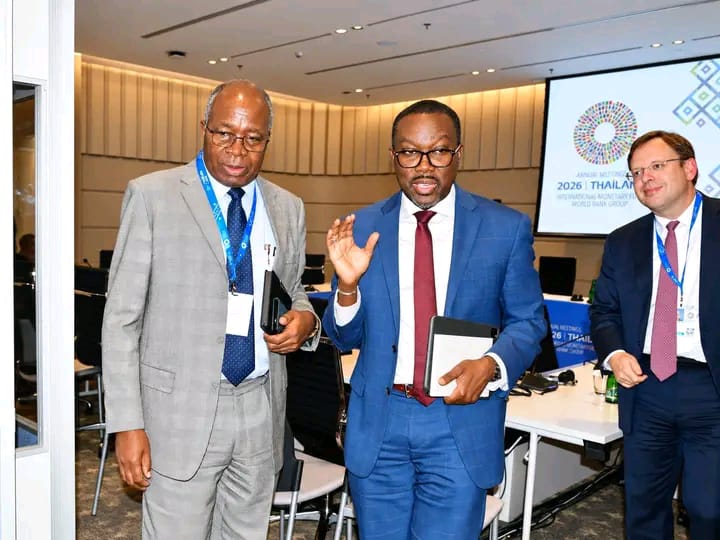
The priorities were discussed during bilateral talks between Finance and National Planning Minister Situmbeko Musokotwane and World Bank Regional Vice President for East and Southern Africa Ndiame Diop on the sidelines of the 2026 International Monetary Fund (IMF) and World Bank Group Annual Meetings in Bangkok.
Musokotwane called for development financing and policy reforms that translate into commercially viable investments capable of accelerating Zambia’s economic transformation.
He said the country’s relatively small domestic market made export-led growth essential, supported by foreign direct investment, a skilled workforce and a competitive business environment.
The minister identified mining, agriculture, tourism, energy, value-added manufacturing and logistics as priority sectors, noting that Zambia’s target of producing three million metric tonnes of copper annually by 2031 would require targeted investment and sector-specific reforms.
He said achieving these ambitions would also depend on practical implementation plans, appropriate legislative changes and stronger institutional capacity.
“Similar interventions are needed to expand agricultural exports, particularly sugar, soybeans and beef, alongside commercial forestry development. Affordable transport infrastructure would also be critical,” he said.
Musokotwane cited the Lobito Corridor Development and the rehabilitation of the Tanzania-Zambia Railway Authority (TAZARA) and Zambia Railways networks as important investments in connecting producers to international markets.
He said increased output from mining, agriculture and forestry would generate the freight volumes needed to support the commercial viability of the transport corridors.
On agriculture, the minister advocated an integrated production model involving large commercial enterprises, medium-scale producers and smallholder farmers.
He said established investors could strengthen supply chains, create employment and provide reliable markets for smaller producers and businesses.
Responding to the priorities, Diop outlined opportunities under the World Bank’s AgriConnect initiative, in collaboration with the International Finance Corporation (IFC), to address constraints affecting agricultural productivity and private-sector growth.
He referred to recent engagements with young Zambian agricultural entrepreneurs who had highlighted barriers to expanding their businesses, saying their concerns were being incorporated into the Bank’s project preparation process.
Diop said agricultural investment needed to be supported by feeder roads, connections to railway networks and digital platforms linking farmers and cooperatives with input suppliers, commercial buyers and markets.
He also highlighted the potential of geospatial mapping to identify suitable agricultural production areas and determine infrastructure requirements. This, he said, would help ensure that investments in crops such as maize and sugar were supported by reliable transport and market connections.
“The Bank’s proposed approach would integrate these requirements during project design rather than treating agricultural production and supporting infrastructure as separate interventions,” he said.
Diop further proposed earlier engagement with Zambian authorities to identify investment bottlenecks, strengthen project preparation and improve implementation.
The discussions also covered energy investment, the delivery of existing World Bank-supported projects and preparedness for potential El Niño-related climate shocks.
Meanwhile, Zambia’s Ambassador to Malaysia, accredited to Thailand, Morecome Mumba, said the Bangkok meetings provided an opportunity for Zambia to engage international financiers, development institutions and prospective investors.
He said the gathering also allowed the delegation to assess global challenges, including debt sustainability, geopolitical tensions, energy disruptions and artificial intelligence.
Mumba cited pressures on petroleum supplies, particularly those linked to the Strait of Hormuz, as highlighting the need to strengthen economic resilience through increased domestic production.
He said progress in debt restructuring, the rebuilding of international reserves and economic reforms had laid the groundwork for investment expansion, but cautioned that stronger productivity and effective implementation would be necessary to sustain the gains.
Drawing lessons from Thailand’s development experience, Mumba called for greater discipline, punctuality and accountability in Zambia’s public and private sectors.
“Diplomatic missions are intensifying investment promotion, with prospective investors from several ASEAN countries registering for the IZIC Conference scheduled for December 2026 in Zambia. Our country must be found ready,” he said.
Mumba said the delegation’s engagements were aimed at mobilising partnerships to support Zambia’s economic transformation through 2031 and beyond.
He said the ultimate objective was to ensure that such partnerships increased production, strengthened exports, created employment and generated sustainable revenue for public services, translating economic growth into tangible improvements in people’s livelihoods.
No comments yet. Be the first to comment!